


Wrinkle Relaxing Treatments Explained Forehead Crows Feet Frown Lines and More
Wrinkle relaxing treatments are often talked about as if they only do one thing, smooth a few lines on the forehead. In reality, they can be used in several precise areas of the face to soften expression lines, balance small muscle movements, and create a fresher, more rested look.
These treatments usually involve small injections of a purified botulinum toxin product. It works by temporarily relaxing targeted facial muscles, which can reduce the folding of the skin above them. The goal is not to freeze the face. When done well, the result should still look like you, just a little softer and more refreshed.
This guide explains the most common treatment areas, what each one can help with, what results may look like, and how to choose a practitioner safely. It is for general information only and does not replace advice from a qualified medical professional.

How wrinkle relaxing treatments work
Wrinkle relaxing injections target specific muscles that create expression lines. These are known as dynamic wrinkles because they appear or deepen when the face moves, such as when raising the eyebrows, smiling, frowning, or scrunching the nose.
Common examples include:
Horizontal forehead lines from raising the brows
Crow’s feet from smiling or squinting
Frown lines between the eyebrows
Bunny lines on the nose
Downturned mouth corners
Chin dimpling
Neck bands
The treatment does not fill lines in the way dermal filler does. Instead, it reduces the repeated muscle movement that creases the skin. Over time, this can make existing lines look softer and may help slow deeper lines from forming.
Most people start to notice changes within a few days, with the full effect often settling around the two-week mark. Results are temporary, so repeat treatments are usually needed to maintain the effect.
The forehead can look smoother without looking heavy
Forehead lines are among the most requested treatment areas. They form when the frontalis muscle lifts the eyebrows. Some people see fine lines only when they raise their brows, while others notice lines that remain visible at rest.
A careful forehead treatment can:
Soften horizontal lines
Create a calmer, smoother upper face
Help makeup sit more evenly
Reduce the habit of constantly lifting the brows
The forehead needs a skilled approach because this muscle helps hold the eyebrows up. Too much product, or product placed in the wrong pattern, can make the brows feel heavy or lower than expected. A good practitioner will assess brow position, eyelid shape, and natural facial movement before treating this area.
For a natural result, the aim is usually softening rather than removing every line. Some movement should remain, especially in expressive faces.
Frown lines can make the face look less tense
Frown lines sit between the eyebrows and are often called “11 lines.” They are caused by small muscles that pull the brows inward and downward. These lines can make the face look worried, tired, or stern, even when the person feels relaxed.
Treating frown lines can help:
Soften vertical lines between the brows
Reduce a tense or angry resting expression
Prevent deep creasing from repeated frowning
Create a more open look around the eyes
This is one of the most common and predictable areas for wrinkle relaxing treatments. It is also an area where precision matters. The practitioner needs to place the injections correctly to relax the frown muscles while maintaining natural brow movement.
Some people choose to treat frown lines on their own. Others combine them with the forehead and crow’s feet for a balanced upper-face result.
Crow’s feet can soften while keeping the smile natural
Crow’s feet are the fine lines that fan out from the outer corners of the eyes. They usually appear when smiling, laughing, or squinting. For many people, they are a normal and warm part of facial expression. Treatment does not need to erase them completely.
A crow’s feet treatment can:
Soften lines around the outer eyes
Make the eye area look more rested
Reduce creasing when smiling
Help with makeup settling into fine lines
The best results still allow the eyes to smile. Over-treatment can make the upper face look stiff or affect the natural character of the smile. A careful practitioner will use conservative placement and adjust the dose based on muscle strength, face shape, and previous treatment history.
Crow’s feet can also be linked to lifestyle factors such as sun exposure and squinting. Good sunscreen, sunglasses, and skin care can support treatment results.

Bunny lines can be treated with small, precise injections
Bunny lines are the small diagonal wrinkles that appear on either side of the nose when scrunching or smiling. They can become more noticeable with age or after treating other upper-face areas, especially if the nose muscles start to compensate.
Treatment in this area is usually subtle. It can:
Reduce nose scrunch lines
Balance movement after forehead or frown line treatment
Create a smoother look across the upper nose
This area requires caution because the muscles around the nose and upper lip are close together. Too much relaxation can affect the smile or upper lip movement. Most practitioners use a light touch here.
A brow lift can open the eye area subtly
A non-surgical brow lift can be created by relaxing certain muscles that pull the brow downward, especially around the outer brow. This can allow the lifting muscles of the forehead to raise the brow slightly.
A wrinkle relaxing brow lift may help:
Create a subtle arch or lift at the outer brow
Open the eye area
Reduce a tired or heavy look
Improve balance between the brows
This is not the same as a surgical brow lift. The result is usually modest and temporary. It works best for people with suitable brow anatomy and good forehead function.
A practitioner should assess whether a brow lift is realistic. In some cases, treating the forehead too strongly can reduce lift rather than improve it. This is why the upper face should be assessed as a whole, not as separate isolated lines.
A lip flip can create the look of a fuller upper lip
A lip flip uses tiny amounts of wrinkle relaxing product around the upper lip. It relaxes part of the muscle that curls the lip inward, allowing the top lip to roll out slightly.
A lip flip can:
Make the upper lip look a little more visible
Help reduce a gummy smile in some cases
Create a soft enhancement without adding volume
Improve the shape of the lip border when smiling
A lip flip is not the same as lip filler. It does not add volume or structure. People who want a larger or more defined lip may need filler instead, or a combination plan.
Because the mouth is involved in speaking, eating, drinking, and facial expression, dosing must be conservative. Too much product can make it harder to use a straw, pronounce certain words, or control liquids at the edge of the mouth. These effects are temporary, but they can be inconvenient.
Downturned mouth corners can look more lifted
The corners of the mouth can turn down due to muscle pull, facial anatomy, or ageing changes. One muscle, often called the DAO, pulls the mouth corners downward. Relaxing it can help reduce that downward pull.
Treatment may help:
Soften a sad or stern resting expression
Give the corners of the mouth a slight lifted look
Improve balance in the lower face
Support results from filler in some treatment plans
This is a small but skilled treatment area. The practitioner must understand the muscles around the mouth because they work closely together. If product spreads or is placed incorrectly, it can affect smile symmetry.
Chin dimpling can become smoother
Some people develop a pebbled or dimpled chin, often called “orange peel” texture. This is caused by activity in the mentalis muscle. It may appear when speaking, closing the lips, or making certain expressions.
Treating the chin can:
Smooth dimpling or uneven texture
Relax a tight-looking chin
Improve lower-face balance
Reduce strain when the lips close
This area often produces a subtle but pleasing change. It can work especially well when the dimpling is caused by muscle activity rather than skin texture alone.
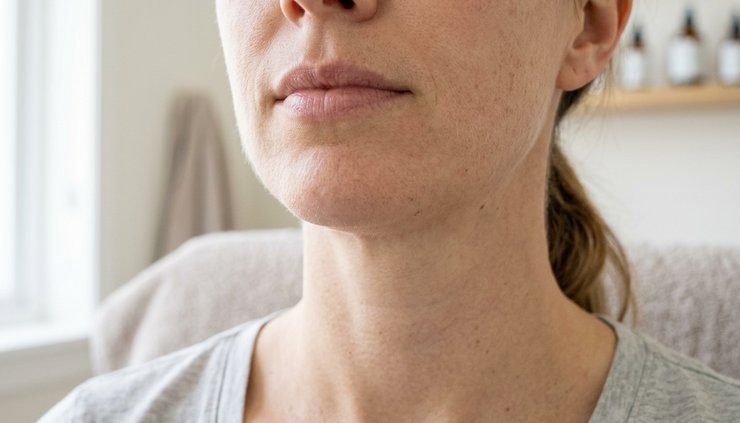
Jawline and masseter treatments can soften strong muscle activity
The masseter muscles sit at the sides of the jaw and help with chewing. In some people, these muscles are naturally strong or enlarged. They may also be active in people who clench or grind their teeth.
Masseter treatment may help:
Slim the appearance of a square jaw caused by strong muscle bulk
Soften tension in the jaw area
Reduce visible clenching activity
Create a more tapered lower-face look in suitable candidates
This is a more advanced treatment area and should only be performed by someone with strong facial anatomy knowledge. It is not suitable for every jaw shape. If jaw width comes from bone structure or fat distribution, muscle-relaxing injections will not create the same effect.
People with jaw pain, grinding, or dental issues should also speak with a dentist or medical professional. Wrinkle relaxing treatment may help some muscle-related symptoms, but it is not a complete dental or medical treatment plan.
Neck bands can look softer with the right approach
Vertical neck bands, often linked to the platysma muscle, can become more visible with age or expression. Small injections can relax the pull of these bands and soften the appearance of the neck.
Potential benefits include:
Softer vertical neck bands
A smoother-looking neck at rest
A more defined lower face in some people
Less downward pull around the jawline
Neck treatment needs careful assessment. Skin laxity, muscle activity, and overall facial structure all affect the outcome. In some cases, skin treatments, filler, or surgery may be more appropriate.
A gummy smile can be reduced in suitable cases
A gummy smile happens when a larger amount of gum shows as the person smiles. Sometimes this is caused by strong upper lip movement. Small injections can relax the muscles that lift the upper lip too high.
This treatment may:
Reduce gum show when smiling
Create a more balanced smile
Help the upper lip sit lower during expression
Not every gummy smile is caused by muscle activity. Tooth position, jaw structure, lip length, and gum shape can all play a role. A good practitioner should explain whether this treatment is likely to help or whether dental or orthodontic advice would be more suitable.
What to expect during the procedure
A wrinkle relaxing appointment is usually quick, but it should not feel rushed. The consultation matters as much as the injections.
A typical appointment includes:
Medical history and suitability check
The practitioner should ask about health conditions, medications, allergies, pregnancy or breastfeeding, previous treatments, and your goals.
Facial movement assessment
You may be asked to raise your brows, frown, smile, scrunch your nose, purse your lips, or clench your jaw. This helps map the right muscles.
Treatment planning
The practitioner should explain which areas they recommend, what result is realistic, possible side effects, and aftercare.
Small injections
The injections are usually brief and use a fine needle. Most people describe the sensation as a quick pinch.
Aftercare advice
You may be advised to avoid rubbing the area, strenuous exercise, alcohol, or certain skin treatments for a short period after treatment. Follow the specific advice given by your practitioner.
Results do not appear instantly. The treated muscles gradually relax over several days. A follow-up review may be offered, often once the product has fully settled.
How to choose a qualified practitioner
The safest and most natural-looking results come from careful assessment, correct dosing, and a strong understanding of anatomy. Price should not be the main deciding factor.
Look for someone who:
Has appropriate medical or aesthetic training
Can explain risks clearly
Works in a clean, suitable treatment setting
Takes a full medical history
Uses licensed products from reputable sources
Offers a tailored treatment plan
Does not pressure you into treatment
Has a process for follow-up and managing complications
Ask to see examples of natural results, but remember that every face is different. The best practitioner will be honest about what treatment can and cannot do.
A good result should fit the face in motion, not just look smooth in a still photo.
Common misconceptions about wrinkle relaxing treatments
“It will freeze my face”
A frozen look usually comes from too much product, poor placement, or a result that does not match the person’s natural expressions. Skilled treatment can soften lines while keeping movement.
“It is only for older people”
Some people use treatment once lines are already visible at rest. Others start earlier to reduce repeated creasing. The right timing depends on facial movement, skin quality, goals, and suitability, not age alone.
“It works the same as filler”
Wrinkle relaxing injections reduce muscle movement. Filler adds volume, shape, or support. They are different treatments, even though they can sometimes be used together.
“More product means better results”
More product can increase the risk of heaviness, stiffness, asymmetry, or unwanted changes to expression. Good treatment uses the right amount in the right place.
“Anyone can inject it safely”
The products may be common, but the treatment is still a medical procedure. Facial anatomy is complex. Choose a qualified practitioner who can assess, treat, and manage any issues appropriately.

The best results come from a tailored plan
Wrinkle relaxing treatments can be used across many areas, from forehead lines and crow’s feet to frown lines, bunny lines, brow lifting, lip flips, downturned mouth corners, chin dimpling, jawline concerns, neck bands, and gummy smiles. Each area has its own purpose, benefits, and limits.
The most natural results come from balance. Treating one area can affect how another area moves, so the face should be assessed as a whole. A light, thoughtful approach usually looks better than trying to remove every line.
If treatment is being considered, start with a consultation rather than a fixed idea of what to have. Ask questions, check qualifications, and choose someone who values safety as much as appearance. That is the best route to results that look refreshed, comfortable, and still fully expressive.


Comments